As an Amazon Associate this site earns from qualifying purchases.
Recommended Products
| Product | What it covers | Link |
|---|---|---|
| Eagle Leather Boot Oil for Work Boots | Conditioning and moisture protection, no cleaner included — 8.45oz (250mL) all-natural oil with applicator top and a 12"x12" waffle weave towel | Check Price on Amazon |
| LANBEIDE Leather Boot Care Kit with Saddle Soap | Clean, condition and waterproof — soap, mink oil, wax, 3 brushes, cloth, sponge pad | Check Price on Amazon |
| CUTEUP Leather Boot Care Kit | Clean, condition and waterproof — soap, mink oil, wax, 3 brushes, microfiber cloth, 2 polishing cloths | Check Price on Amazon |
Disclosure: We earn a small commission from qualifying Amazon purchases at no extra cost to you.
As an Amazon Associate we earn from qualifying purchases. This page contains affiliate links, and we may receive a commission if you buy through them — at no extra cost to you.
As an Amazon Associate, we earn from qualifying purchases.
Last Updated: September 2026
The short answer: brush off the dry dirt, wash the leather with saddle soap and a damp cloth, let the boots air-dry slowly away from any heat source, condition with oil or a mink-oil balm while the leather is barely damp, then seal the surface with a waterproofing wax. Do that every few weeks in wet season and your boots stop cracking at the flex point — which is where work boots almost always die first.
This website does not do product research. What follows is a maintenance routine built from how leather behaves, plus product guidance read directly off published Amazon listing specifications for three care products.
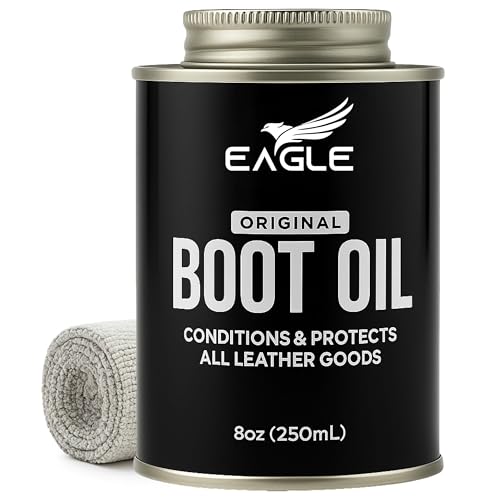
- DEEP LEATHER CARE: Includes an easy-to-use applicator top and a premium 12"x12" waffle weave towel cloth for convenient application and polishing penetrating deep into the leather
- ULTIMATE BOOT CONDITIONER: Our leather boot oil provides excellent conditioning, keeping your boots soft, supple, and resistant to cracks
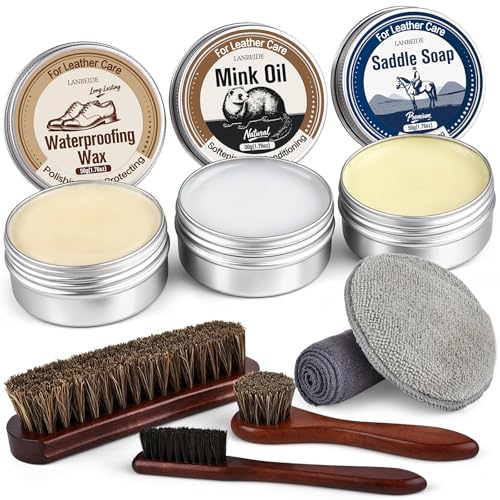
- 8-in-1 Premium Leather Boot Care Kit & Cleaner: This all-inclusive set is your ultimate solution for leather cleaner and conditioner, delivering a professional 3-in-1 treatment to
- Powerfully Gentle Leather Boot Cleaner with Saddle Soap: Our specialized saddle soap for leather provides a deep, non-abrasive cleanse. This pure formula acts as a superior
The Problem: Work Boots Don't Wear Out, They Dry Out
Here's the thing most people get wrong. A leather work boot rarely fails because the leather abrades through. It fails because dirt, sweat salts and repeated soak-dry cycles strip the fats out of the hide. The leather stiffens, then splits across the vamp where your foot bends.
Three things drive that: alkaline concrete dust and de-icing salt drawing moisture out, drying boots too fast next to a heater, and never replacing the oils that water carries away. Every step below targets one of those.
Step-by-Step: Clean, Dry, Condition, Waterproof
- Pull the laces and the insoles. Laces trap grit in the eyelet row. Insoles hold sweat, and they need to dry separately or the boot never fully dries.
- Brush the boots dry first. Knock off caked mud and dust before any water touches the leather. Wet mud smeared into the grain is far harder to remove than dry mud brushed off. Both full kits include multiple brushes for this: the LANBEIDE set lists three professional brushes, and the CUTEUP set specifies a horsehair brush, a detailing brush and a cleaning brush.
- Wash with saddle soap and a damp — not soaked — cloth. Work up a light lather, go section by section, and wipe residue off as you go. LANBEIDE describes its saddle soap as a deep, non-abrasive cleanse that locks in the leather's natural oils; CUTEUP describes its saddle soap as removing dirt, sweat and buildup without stripping essential oils. That distinction matters, because dish soap and degreasers do strip those oils.
- Dry wet work boots slowly. Stuff them loosely with newspaper, keep them at room temperature with air moving around them, and change the paper once. Never a radiator, never a heat gun, never a truck dashboard in July. Fast heat shrinks and hardens leather permanently, and it can loosen cemented soles.
- Condition while the leather is barely damp. This is the step everyone skips. A slightly damp hide takes oil deeper than a bone-dry one. Apply thin, let it absorb, repeat only if the leather still drinks it in.
- Seal with waterproofing wax last. Wax goes on top of conditioned leather, not instead of it. Pay attention to the welt seam and the flex crease — those are the two places water actually gets in.
- Buff and re-lace. A horsehair brush evens out the wax film. CUTEUP's kit lists a horsehair brush plus two polishing cloths for this stage.
Tools & Products You'll Need
Eagle Leather Boot Oil for Work Boots, Cowboy Boots, & Shoes — Best for oil tanned leather boot care when you already own a cleaner
The Eagle Leather Boot Oil for Work Boots, Cowboy Boots, & Shoes is a conditioning and protecting oil rather than a full kit, and that's the point. The listing specifies 8.45oz (250mL) of all-natural boot oil for deep conditioning and protecting work boots, cowboy boots and shoes, packaged with an applicator top and a 12"x12" waffle weave towel. For oil-tanned work leather — the kind that already looks slightly greasy from the factory — a pourable oil is usually the more natural match than a hard paste.
One detail the manufacturer states plainly and you should not ignore: it will darken the leather. On a tan or honey-colored boot that's a permanent aesthetic decision, so test a heel or tongue patch first.
The manufacturer says it's formulated to offer superior protection from moisture and harsh elements. Read that as water resistance from a conditioned, oiled hide — the supplied listing information does not describe a separate sealing wax layer, and it does not include a cleaner. You'll still need saddle soap from somewhere.
Suits: someone who has a cleaner already, owns oil-tanned or very dry boots, and doesn't mind a darker finish. Tradeoff: the Eagle Leather Boot Oil for Work Boots, Cowboy Boots, & Shoes listing does not include a cleaner or a separate sealing wax, and the darkening is stated by the manufacturer, not optional.
LANBEIDE Leather Boot Care Kit with Saddle Soap, Mink Oil & Waterproof Wax — Best for covering the whole routine in one purchase
The listing describes an 8-in-1 kit delivering a 3-in-1 clean, condition and protect treatment, with a full tool set of saddle soap, mink oil, waterproof wax, three professional brushes, a cloth and a sponge pad. That maps cleanly onto steps 2 through 7 above — one box, no gaps.
The waterproofing wax is described by the manufacturer as an impenetrable, breathable shield against rain, mud and salt. Treat "impenetrable" as marketing language rather than a rated waterproof standard; the supplied listing information states no test standard, immersion depth or duration. The realistic read is a renewable surface barrier that sheds water and needs reapplying, which is true of every wax.
Mink oil is a conditioning fat, and like most conditioning fats it tends to darken leather. The listing does not state a darkening warning either way, so patch-test.
Suits: anyone starting from zero who wants cleaner, conditioner, wax and brushes in one order. Tradeoff: the listing does not state the volume of each individual product in the kit, so you can't compare it on ounces against a standalone bottle.
CUTEUP Leather Boot Care Kit – Saddle Soap for Leather, Mink Oil, Waterproofing Wax, Shoe Brushes — Best for a more specified brush and cloth lineup
Same three-chemical logic, more detail on the tools. The manufacturer lists a horsehair brush, a detailing brush, a cleaning brush, saddle soap, mink oil, waterproofer wax, a microfiber cloth and two polishing cloths. Naming the brush types is genuinely useful — a detailing brush is what gets soap out of the welt stitching, which is exactly where salt collects.
CUTEUP describes the waterproofer wax as forming a breathable barrier against water, snow, salt and mud that shields without sealing in stiffness. That is the manufacturer's own wording rather than tested performance data, so it does not establish how this wax compares with any other wax in winter conditions. Again, no standard or duration is published in the supplied listing, so plan on reapplying seasonally.
Suits: anyone who wants a kit whose brush and cloth lineup is itemized for stitched welts. Tradeoff: as with the other kit, individual product quantities are not stated in the supplied listing information.
Tips for Best Results
- Rotate two pairs. A boot needs roughly a full day to dry internally. Wearing the same pair daily in wet work guarantees you're standing in damp leather.
- Rinse salt off the same day. Salt keeps pulling moisture out of leather long after it dries.
- Thin coats, more often. Over-oiling softens leather past the point where it supports your ankle.
- Condition before storage, not after. Leather sitting dry for a season is leather cracking for a season.
Common Mistakes to Avoid
- Drying boots by a heat source. The single fastest way to ruin a good pair.
- Waxing over dirt. You've just sealed abrasive grit against the grain.
- Using an oil on a boot you want to stay light. Eagle's listing states its oil will darken leather.
- Treating wax as permanent. None of the supplied listings publish a duration for the barrier.
- Machine washing. Full grain leather boot maintenance and washing machines are not compatible.
How We Research
We read published Amazon Creators API verified product records and the product listing feature bullets for each ASIN, retrieved 2026-09-08, and compared what each manufacturer actually claims against what a cleaning-conditioning-waterproofing routine requires. Where a listing does not publish a figure — individual bottle volumes in the kits, for example — we say so rather than estimate. No product was handled, worn or tested here.
For general guidance on evaluating consumer product claims and safety, CPSC and USA.gov consumer protection are worth knowing.
Final Verdict
If you own nothing, buy a kit. Both the LANBEIDE Leather Boot Care Kit with Saddle Soap, Mink Oil & Waterproof Wax and the CUTEUP Leather Boot Care Kit cover cleaner, conditioner, wax and brushes in one purchase, so the whole clean-condition-seal routine is covered without a second order. The LANBEIDE Leather Boot Care Kit with Saddle Soap, Mink Oil & Waterproof Wax describes its wax as a breathable shield against rain, mud and salt. The CUTEUP Leather Boot Care Kit describes its waterproofer wax as a breathable barrier against water, snow, salt and mud, and it itemizes its brush lineup down to a detailing brush. Neither listing publishes tested or comparative weather-protection data, so choose on the tool set you prefer rather than on wording.
Buy the Eagle Leather Boot Oil for Work Boots, Cowboy Boots, & Shoes instead if you already have saddle soap and your boots are oil-tanned, dry, or both — 8.45oz (250mL) with an applicator and a 12"x12" waffle weave towel is a straightforward conditioning refill. Just accept the darkening the manufacturer states up front.
Related Resources
- How to choose safety-toe work boots
- Best insoles for standing on concrete all day
- Waterproof vs water-resistant work boots explained
Sources & Methodology
Nothing on this page came from a lab or a jobsite — this site does not physically test products, and no pair of boots was oiled, soaked or dried on our behalf. What we did do is pull the Amazon Creators API verified product records and read every product listing feature bullet for all three ASINs on 2026-09-08, then check each manufacturer claim against the actual sequence a leather boot routine requires: clean, dry, condition, seal. For a consumables category like boot care, that kind of specification reading tells you reliably what is in the box and what each product is formulated to do — it cannot tell you how long a wax barrier lasts on your boots, because none of the supplied listings publish that figure.