As an Amazon Associate this site earns from qualifying purchases.
Quick Picks
| Boot | Safety toe standard (as published) | Notable published feature |
|---|---|---|
| Wolverine Men'sOverpass 6" Mid Composite Toe Waterproof Work Boot | Composite Toe ASTM F2413-11 M I/75 C/75 EH | Slip, oil, water, abrasion, and chemical-resistant outsole |
| NORTIV 8 Waterproof Steel Toe Work Boots for Men | Steel toe and rubber toe cap meeting ASTM 2413-18 | Lugged rubber outsole meeting ASTM F3445-13 |
| Hogent Steel Toe Boots for Men | Steel toe cap (specific ASTM designation not stated in the supplied listing) | Lightweight KEVLAR layer for puncture resistance |
Disclosure: We earn a small commission from qualifying Amazon purchases at no extra cost to you.
As an Amazon Associate we earn from qualifying purchases. This page contains affiliate links, and we may receive a commission if you buy through them — at no extra cost to you.
As an Amazon Associate, we earn from qualifying purchases.
Last Updated: September 2026
Short answer: there is no universal number of months, and anyone who gives you one is guessing. Work boot lifespan is set by how many hours a day you stand in them, what you stand on, and how fast the specific protective components break down. What you can do is stop guessing and start reading the boot itself — the outsole, the midsole, the upper, and the safety toe each fail in a way you can see or feel.
This page is a research-based guide. This website does not perform product research, and nothing below describes a boot anyone here wore. The product facts come from published Amazon listing data retrieved on 2026-09-08.
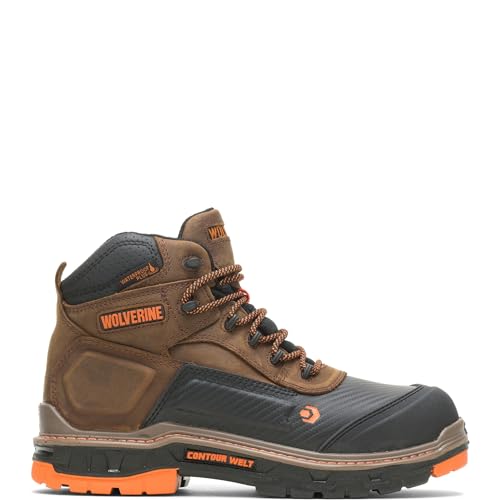
- Flexible, athletic contour welt construction moves with you by bending and flexing at essential points
- Premium waterproof leather with abrasion resistant toe
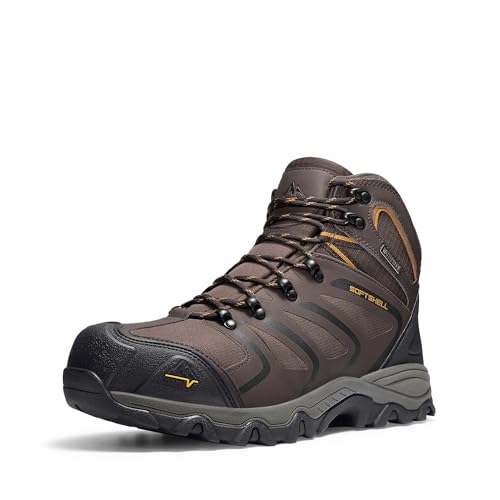
- Enhanced Toe Protection: These work boots for men feature a steel toe and rubber toe cap meets ASTM 2413-18 standard, that protect your feet from falling objects and accidental
- Waterproof Upper: With a static waterproof upper that lasts for up to 4 hours, these men's steel toe boots keep feet dry and comfortable even in wet and challenging work
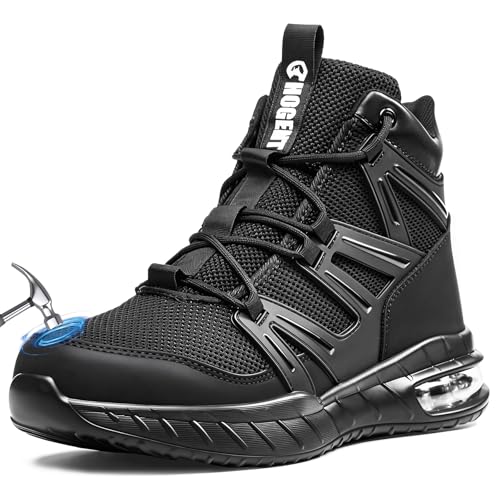
- 【STEEL TOE PROTECTION】: Hogent steel toe boots for men feature a protective steel toe cap for demanding jobs; high-top coverage adds ankle support; these steel toe shoes combine
- 【PUNCTURE-RESISTANT SUPPORT】: Built with a lightweight KEVLAR layer to help protect feet from nails and sharp objects; these work boots for men offer flexible support and
The Problem: "Still Wearable" Is Not the Same as "Still Protective"
Here's the thing. A work boot can look fine and still have stopped doing its job. The parts that protect you — the outsole tread that resists slipping, the safety toe that resists impact and compression, the waterproof upper — degrade on completely different schedules than the leather or textile that your eyes judge.
That matters because the certifications are the whole point of a safety boot. The Wolverine Overpass listing publishes a composite toe rated ASTM F2413-11 M I/75 C/75 EH [S3], and the NORTIV 8 listing states its steel toe and rubber toe cap meet ASTM 2413-18 [S4]. Those ratings describe the boot as manufactured. Neither listing states how long the rating holds up under wear, and no listed source here does either. Treat visible damage to a toe box as a reason to retire the boot, not as cosmetic.
Step-by-Step: How to Decide If Your Boots Are Done
- Check the outsole tread depth. Put the boots side by side on a flat surface and look at the lug pattern under the ball of the foot and the heel. When the lugs are worn smooth, the slip resistance the outsole was designed around is gone. The NORTIV 8 boots publish a lugged rubber outsole meeting ASTM F3445-13 for traction [S4] — that standard applies to the tread as designed, not to a tread you have flattened.
- Press the midsole with your thumb. Cushioning compresses permanently over time. Foam midsoles like the lightweight EVA midsole NORTIV 8 lists for reducing fatigue from prolonged standing [S4] lose rebound long before they look worn out. New foot or knee soreness at the end of a shift, in boots that used to feel fine, is a midsole signal.
- Inspect the toe area. Look for a crushed, creased, or exposed toe cap, or separation between the cap and the upper. Any deformation of a safety toe means the boot should come out of service.
- Do a flex test. Bend the boot at the ball of the foot. Cracks that go through the outsole or through the leather at the flex point are structural, not cosmetic. Wolverine describes the Overpass as using a flexible, athletic contour welt construction that bends at essential points [S3]; cracking at those same points is the end of that design's useful life.
- Check for water coming in. If your socks get wet in conditions the boot used to handle, the waterproof layer has failed. Note the scope of what is promised: NORTIV 8 describes a static waterproof upper that lasts for up to 4 hours [S4], which is a duration claim, not permanent immersion protection. Wolverine describes premium waterproof leather with an abrasion resistant toe [S3] without stating a time limit in the supplied listing.
- Check the heel counter and lacing hardware. A collapsed heel counter lets the foot roll. Broken eyelets mean you cannot lock the boot to your foot, which undermines ankle support like the high-top coverage Hogent lists [S5].
- Check the insole separately. Insoles wear out faster than boots. The Wolverine listing specifies a removable ortholite cushioned footbed [S3], which means replacing that one component can extend usable comfort without replacing the boot.
Building a Work Boot Replacement Schedule
Instead of a calendar date, build a schedule around inspection intervals. Look the boots over once a month, and do the full seven-step check every quarter. Log the month you started wearing a pair — most people underestimate elapsed time badly.
If you rotate two pairs, each pair gets drying time between shifts, and both the foam and the linings recover between wears. That is a reasonable inference from how compression-set foam and moisture work, not a figure any listed source publishes.
One more practical rule: replace before failure, not after. Boots retired on schedule can become yard or shop backups. Boots retired after a slip are a lesson you paid for.
Recommended Products: Replacement Boots Worth Considering
Wolverine Men'sOverpass 6" Mid Composite Toe Waterproof Work Boot — Best for chemical and abrasion exposure
This is the pick when your wear-out pattern is the outsole and the upper, not the cushioning. Wolverine publishes a slip, oil, water, abrasion, and chemical-resistant outsole [S3] — a broader resistance list than the other two listings supply, which suits shops, plants, and job sites where the ground is not just dirty but chemically hostile.
The Wolverine Men'sOverpass 6" Mid Composite Toe Waterproof Work Boot listing states a composite toe designated ASTM F2413-11 M I/75 C/75 EH [S3], a designation that includes EH as published by the listing; the supplied sources do not establish that any particular employer's electrical hazard requirement is met, so confirm acceptance of that exact designation with your employer and the manufacturer before ordering. The removable ortholite footbed [S3] also means you can refresh the cushioning layer separately rather than binning a boot with good tread.
Limitation worth knowing: the supplied listing does not state a puncture-resistant plate. If you walk on nail-strewn demolition debris, that omission matters.
NORTIV 8 Waterproof Steel Toe Work Boots for Men — Best for traction on mixed terrain
If your last pair died from slick, worn-smooth soles, this listing is the most explicit about tread performance: a lugged rubber outsole meeting ASTM F3445-13 [S4], alongside a steel toe and rubber toe cap meeting ASTM 2413-18 [S4]. The rubber toe cap is a wear part in its own right — it takes the scuffing that would otherwise abrade the upper.
NORTIV 8 lists the boots as suitable for construction sites, warehouses, mines, welding, carpentry, and landscaping [S4], and pairs a mesh-covered EVA insole with a lightweight EVA midsole aimed at fatigue from prolonged standing [S4].
Read the waterproofing claim carefully: the manufacturer describes a static waterproof upper lasting up to 4 hours [S4]. That is a defined window, not all-day wet-weather protection, so plan accordingly if you work in standing water.
Hogent Steel Toe Boots for Men — Best for puncture risk underfoot
This is the only one of the three whose supplied listing mentions underfoot puncture protection: Hogent states a lightweight KEVLAR layer to help protect feet from nails and sharp objects [S5]. For anyone working around framing scrap or demolition, that addresses a failure mode the other two listings do not describe.
The listing also cites a steel toe cap with high-top coverage for ankle support, air cushioning with a breathable lining, and lightweight EVA soles [S5], and says the boots suit construction, warehouses, manufacturing, workshops, farming and delivery work for men and women [S5].
Limitation: the supplied listing does not state a specific ASTM designation for the steel toe, and it does not describe the boot as waterproof. If your employer requires a documented ASTM rating or you work wet, verify with the manufacturer before ordering.
Tips for Getting More Life Out of a Pair
- Rotate two pairs so foam and linings can dry and decompress.
- Loosen and unlace fully when you take them off; yanking boots off crushes the heel counter.
- Dry them at room temperature, away from direct heat, which stiffens and cracks leather.
- Replace worn insoles instead of the whole boot when tread and toe are still sound — practical on boots with a removable footbed like the Wolverine Overpass [S3].
- Clean off chemicals and salt at the end of the shift rather than letting them sit on the upper.
Common Mistakes to Avoid
- Judging lifespan by appearance. Polished leather over a flattened midsole and a bald outsole is still a worn-out boot.
- Assuming waterproof means permanent. Time-limited claims exist; NORTIV 8's is stated as up to 4 hours [S4].
- Keeping a boot after a dropped-object hit. A compressed safety toe is retired, regardless of how it looks.
- Treating one standard as covering everything. A toe standard is not a slip-resistance standard, and neither is a puncture rating.
- Buying on brand memory. Compare the actual published safety designations for the exact model and size you are ordering.
How We Research
This website reads published listing data and manufacturer-supplied specifications, then reasons about what those specs imply for a buyer. For this page, the evidence base is an Amazon Creators API verified product record and the product listing feature bullets for each of the three ASINs above, all retrieved on 2026-09-08. Nobody here wore, flexed, soaked or weighed a boot. Where a listing is silent — a warranty term, a puncture rating, a tread depth — this page says so rather than filling the gap.
Final Verdict
Stop asking how many months work boots last and start running the seven-step check quarterly. Tread, midsole rebound, toe integrity, flex cracks, water ingress, heel counter, insole — when two or more fail, replace.
For replacement, the opinionated call depends on your failure mode. Chemical and abrasion exposure points to the Wolverine Men'sOverpass 6" Mid Composite Toe Waterproof Work Boot, whose listing publishes a slip, oil, water, abrasion, and chemical-resistant outsole and an ASTM F2413-11 M I/75 C/75 EH composite toe [S3]. Traction that keeps failing first points to the NORTIV 8 Waterproof Steel Toe Work Boots for Men and its ASTM F3445-13 lugged outsole [S4]. Nails and sharp debris underfoot point to the Hogent Steel Toe Boots for Men and its KEVLAR puncture layer [S5]. There is no single winner across all three job types, and the supplied evidence does not support naming one.
Related Resources
- Composite toe vs steel toe work boots
- Waterproof work boots buying guide
- How to break in new work boots
- For general consumer safety and recall information, see the CPSC and USA.gov consumer protection resources.
Sources & Methodology
No boot on this page was worn, soaked, flexed or measured by anyone here — this website runs no lab and does no product research, and the lifespan guidance above comes from how footwear components fail rather than from a wear trial. What was done: the Amazon Creators API verified product record and the full set of product listing feature bullets for ASINs B01MU1VO3P, B0D4TBVM48 and B0FVFQ888S were retrieved on 2026-09-08 and read closely, with published safety designations kept at their stated scope. For work boots specifically, that kind of reading tells you reliably what protection a boot is certified to provide when new and where a listing stays silent, which is exactly the information you need to choose a replacement — but it cannot tell you how a given pair will hold up on your particular floor.