As an Amazon Associate this site earns from qualifying purchases.
Quick Picks
| Product | Safety toe type | Standout published spec |
|---|---|---|
| KEEN Utility Men's Vista Energy Low Composite Toe Work Shoes | Carbon-fiber, non-metallic | KEEN states the asymmetrical carbon-fiber toes are 15% lighter than steel and meet ASTM F2412-18 and F2413-18 M I/75 C/75 EH |
| FitVille Extra Wide Steel Toe Shoes for Men Composite Toe Work Shoes | Cap material unconfirmed — the title says steel toe and the bullets say composite toe cap | FitVille lists 800 grams a pair and wide/extra wide sizing |
| LIANGGO Steel Toe Shoes for Men Women Composite Toe Shoes | Cap material unconfirmed — the listing says both steel and composite | Listing describes a breathable lining and air-cushion sole for all-day wear |
Disclosure: We earn a small commission from qualifying Amazon purchases at no extra cost to you.
As an Amazon Associate we earn from qualifying purchases. This page contains affiliate links, and we may receive a commission if you buy through them — at no extra cost to you.
As an Amazon Associate, we earn from qualifying purchases.
Last Updated: September 2026
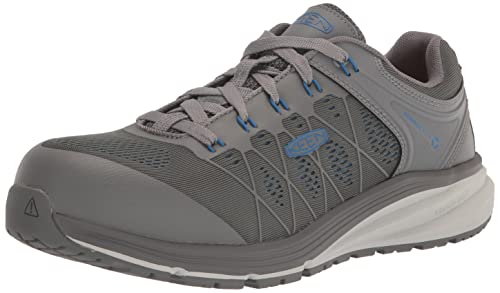
- The Keen Utility Vista Energy showcases a mesh and synthetic upper, lace-up construction and a carbon-fiber safety toe
- KEEN.ReGEN: A lightweight, compression-resisting midsole providing 50% more energy return than standard EVA foam
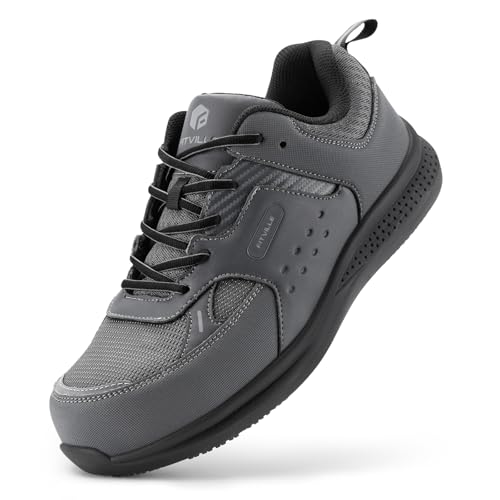
- Solid safety composite toe cap provides ultra protection against impact and compression hazards; It's been tested it can withstand up to 2500 pounds of vertical pressure and 75
- Slip resistant rubber outsole lowers the risk of unexpected slips and falls, provides superior grip performance; Added traction, safety, stability and durability
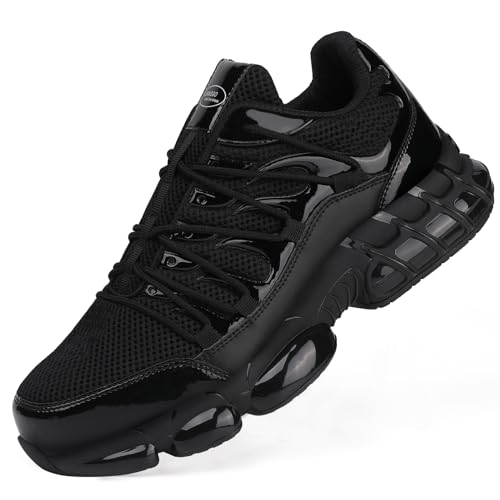
- Steel Toe Shoes:The indestructible safety steel toe shoes for men women, Steel toe caps are not easily damaged, and steel toe shoes can prevent heavy objects from falling and
- Lightweight and Comfortable: The steel toe shoe features a breathable lining and insole,the shoe of ultra-light material fits better on your feet,providing all-day comfort at work
The Short Answer
All three safety toe types can meet the same impact and compression standard, so the real decision is about weight, metal content and thermal behavior. Steel is the traditional cap and conducts heat and cold readily. Composite (usually plastic, fiberglass or Kevlar-family materials) is non-metallic, so it does not trip metal detectors and does not transfer cold the way metal does. Carbon fiber sits in the non-metallic camp too, and manufacturers position it as the lightest of the group.
Here is the useful framing: pick the cap that solves your specific job problem — airport screening, freezer aisles, or eight hours on concrete — because certification alone will not separate them.
The Problem: Three Caps, One Standard, Very Different Days
Work boot listings throw "safety toe" around as if it were one thing. It is not. The cap material changes what happens when you walk through a screening checkpoint, stand in a cold warehouse, or carry the shoes on your feet for a twelve-hour shift.
And the certifications do not settle it. KEEN publishes ASTM F2412-18 and F2413-18 M I/75 C/75 EH compliance for the carbon-fiber Vista Energy Low — that is the impact/compression and electrical-hazard language, and a steel cap can carry the same designation. So compliance tells you the toe is protective. It does not tell you which one you should buy.
Step-by-Step: Choosing Your Safety Toe
- Start with your site's screening rules. If you clear a metal detector daily — airports, courthouses, secure manufacturing, some data centers — a non-metallic cap removes a recurring hassle. KEEN describes the Vista Energy's toes as "non-metallic carbon-fiber," which is the specific wording to look for on a spec sheet.
- Check the temperature of your workplace. Metal moves heat. In a freezer or an unheated winter yard, a non-metallic cap is the conventional choice for that reason alone. The supplied listings do not state insulation ratings for any of these three shoes, so treat cold-weather claims as material-behavior reasoning, not a published thermal number.
- Weigh the weight question honestly. KEEN's own figure is that its carbon-fiber toes are 15% lighter than steel. That is a claim about the cap, not the whole shoe. FitVille separately lists 800 grams a pair for the FitVille Extra Wide Steel Toe Shoes for Men Composite Toe Work Shoes Grey (ASIN B0D6W6FLSP). Those two numbers measure different things and cannot be compared directly.
- Match the fit to your foot, not the marketing. A cap that pinches is a cap you stop wearing. FitVille builds its model in wide and extra-wide and calls it out for wide feet and people dealing with plantar fasciitis or bunions.
- Confirm the hazards the shoe actually covers. Impact and compression protection is toe protection. It is not puncture protection through the sole, not slip certification, and not electrical safety unless the listing says so.
Tools & Products: What Each Cap Type Looks Like in Practice
KEEN Utility Men's Vista Energy Low Composite Toe Work Shoes — Best for metal-free screening and lightweight all-day wear
If your problem is walking through a detector every morning, this is the clearest fit in the group, because KEEN explicitly describes the toes as non-metallic carbon fiber and pairs that with published ASTM F2412-18 and F2413-18 M I/75 C/75 EH compliance. That combination — a stated standard plus stated non-metallic construction — is exactly what a safety manager wants to see in writing.
The rest of the build reads like a light athletic work shoe rather than a boot: a mesh and synthetic upper with lace-up construction, mesh and moisture-wicking textile lining, and a removable metatomical PU footbed. KEEN's KEEN.ReGEN midsole is described as lightweight and compression-resisting, with 50% more energy return than standard EVA foam. Take that as the manufacturer's own comparison against a foam baseline, not an independent bounce measurement.
One genuinely interesting detail: the safety toes are left and right asymmetrical, which KEEN says gives an unobtrusive fit. Asymmetric caps follow the natural shape of the foot instead of forcing both feet into a symmetric box.
Suits: anyone cleared through metal detectors, cold-storage staff who want a non-metallic cap, and workers who want the lightest published cap claim here.
Worth knowing: the supplied listing does not state a puncture-resistant plate, insulation rating, or waterproof rating. It is a low shoe, not an ankle-supporting boot.
FitVille Extra Wide Steel Toe Shoes for Men Composite Toe Work Shoes Grey — Best for wide feet and long standing shifts
Look, most safety toe complaints are fit complaints. FitVille attacks that directly with wide and extra-wide sizing, described as giving toes room to spread naturally, and it names wide feet, plantar fasciitis and bunions as the target buyer.
The protection claim is specific: a toe cap that FitVille says has been tested to withstand up to 2500 pounds of vertical pressure and 75 pounds of vertical instant shock. Note that the supplied record for the FitVille Extra Wide Steel Toe Shoes for Men Composite Toe Work Shoes Grey (ASIN B0D6W6FLSP) contradicts itself on cap material — the product title says "Steel Toe Shoes" while the first feature bullet says "composite toe cap" — so the cap is not confirmed as non-metallic, and anyone who must clear a metal detector should get written confirmation from FitVille first. That is a seller-published test figure, not an independent verification, and the supplied listing does not name an ASTM designation — so if your employer requires a stated ASTM class, confirm it with FitVille before buying.
Comfort features stack up: sponge foam insoles with stable support and anti-odor treatment, EVA midsoles for cushioning across a long shift, a water-repellent upper described as keeping feet dry and breathable, and 3M reflective material for nighttime visibility. FitVille lists the pair at 800 grams. The outsole is slip-resistant rubber, which the brand frames as reducing slip and fall risk.
Suits: warehouse and retail workers on concrete all day, anyone who has given up on standard-width safety shoes, and night shifts where reflectivity helps.
Worth knowing: water-repellent is not waterproof, and slip-resistant here is a manufacturer description rather than a cited slip standard.
LIANGGO Steel Toe Shoes for Men Women Composite Toe Shoes Indestructible Safety Lightweight Steel Toe Sneakers — Best for breathable light-duty work
The cap material here is not settled by the supplied facts: the product title for the LIANGGO Steel Toe Shoes for Men Women Composite Toe Shoes (ASIN B0D9QFXMCM) says both "Steel Toe Shoes" and "Composite Toe Shoes," its first feature bullet says "Steel toe caps," and its fourth bullet is headed "Composite Steel Toe Shoes" — so the listing contradicts itself, and only the seller or manufacturer can confirm whether the cap is metallic. What the listing does lean hard on is airflow: a breathable lining and insole, and the claim that air moves through the shoe as you walk.
LIANGGO's first feature bullet describes the toe caps as steel and as resistant to damage, intended to stop falling objects and foreign objects from injuring toes. The listing names its own use cases plainly: warehouse, kitchen, light-duty factory, auto manufacturing and construction. Note the phrase light-duty factory — that is the seller's framing, and it is a reasonable boundary to respect.
An air-cushioning sole is listed for stable support and shock absorption. The supplied listing does not state an ASTM rating, an insulation figure, or a weight, so a shopper on a site with formal PPE requirements should verify certification directly before ordering.
Suits: buyers who want a ventilated sneaker profile for warmer indoor, light-duty environments and are able to confirm the cap material with the seller first.
Worth knowing: the supplied facts for the LIANGGO Steel Toe Shoes for Men Women Composite Toe Shoes (ASIN B0D9QFXMCM) conflict on whether the cap is steel or composite, so if you must have a non-metallic cap for metal detectors — or specifically want a metal one — get written confirmation from the seller before ordering; a metal cap would also transfer cold in a chilled environment.
Tips for Best Results
- Ask your employer for the exact ASTM designation they require, then match it letter for letter. KEEN publishes M I/75 C/75 EH for the Vista Energy Low; the other two supplied listings do not state ASTM designations.
- Size safety footwear at the end of a shift, when feet are largest. A cap has a fixed shape and will not stretch.
- Treat a removable footbed as an upgrade path. The Vista Energy Low's metatomical PU footbed comes out, which means your own orthotic can go in.
- If reflectivity matters for your route or yard, look for it as a listed feature rather than assuming it. FitVille names 3M reflective material.
Common Mistakes to Avoid
- Assuming "composite" always means non-metallic in the product title. Titles in this category mix "steel toe" and "composite toe" language freely. Read the feature bullets, not the headline.
- Treating an impact rating as full-foot protection. A toe cap protects toes. Metatarsal guards, puncture plates and shank protection are separate features.
- Buying on cap weight alone. A 15% lighter cap does not make a 15% lighter shoe.
- Confusing a seller's pressure figure with a certification. FitVille's 2500-pound figure is the brand's own stated test result.
How We Research
This website does not perform product research. For this guide, product facts were pulled from Amazon Creators API verified product records and the product listing feature bullets for each ASIN, all retrieved on 2026-09-08. Every specification cited above is traced to the specific listing it came from, and where a listing is silent — insulation, waterproofing, ASTM class — this guide says so instead of guessing.
Final Verdict
If the metal detector or the freezer is your daily problem, the KEEN Utility Men's Vista Energy Low Composite Toe Work Shoes is the strongest documented answer here — it is the only one of these three whose listing states both non-metallic carbon-fiber construction and a specific ASTM designation.
If your problem is fit and hours on your feet, the FitVille Extra Wide Steel Toe Shoes for Men Composite Toe Work Shoes is built for it, with extra-wide sizing and a stated 800 grams per pair.
And if you want a ventilated sneaker profile for indoor light-duty work, the LIANGGO Steel Toe Shoes for Men Women Composite Toe Shoes fits that description — but its own listing calls the cap both steel and composite, so confirm the cap material with the seller, along with certification if your site requires it.
Related Resources
- How to size work boots correctly
- Slip-resistant outsoles explained
- Best work shoes for standing all day
- CPSC consumer product safety and USA.gov consumer protection for recall and complaint resources
Sources & Methodology
Nobody at this website put these shoes on, dropped a weight on them, or walked them through a detector — there is no lab here and no test bench. What this guide is built on is close reading of Amazon Creators API verified product records and the manufacturers' own listing feature bullets for the three ASINs above, retrieved 2026-09-08, with each number attributed to the company that published it. In a category where certification language does more work than marketing copy, that spec-level reading is enough to tell you which cap material solves your screening, cold-weather or fit problem, but it is not a substitute for confirming your employer's required ASTM designation before you order.