As an Amazon Associate this site earns from qualifying purchases.
Quick Picks: Fit and Closure Profiles at a Glance
| Boot | Fit-relevant detail from the listing | Safety toe stated | Link |
|---|---|---|---|
| Wolverine Men'sOverpass 6" Mid Composite Toe Waterproof Work Boot | Removable ortholite cushioned footbed; contour welt construction | Composite | Check Price on Amazon |
| FitVille Extra Wide Work Boots for Men Composite Steel Toe Safety Boots High Top Work Shoes for Men | Wide and x-wide size modes; roomy toe box | Composite | Check Price on Amazon |
| NORTIV 8 Waterproof Steel Toe Work Boots for Men | Lugged rubber outsole; mesh-covered EVA insole | Steel | Check Price on Amazon |
| KEEN Utility Men's Gibson Boot (Carbon-Fiber Toe) Belgian/Gum 10.5 Medium | Removable metatomical insole; direct attached outsole | Carbon fiber | Check Price on Amazon |
| VULTREAK Composite Toe Work Boots for Men and Women – Exceeds Steel Toe Protection | Dial closure Quick Fit System, no laces | See toe-material note below | Check Price on Amazon |
| Hogent Steel Toe Boots for Men | High-top coverage; air cushioning; EVA soles | Steel | Check Price on Amazon |
Disclosure: We earn a small commission from qualifying Amazon purchases at no extra cost to you.
As an Amazon Associate we earn from qualifying purchases. This page contains affiliate links, and we may receive a commission if you buy through them — at no extra cost to you.
As an Amazon Associate, we earn from qualifying purchases.
Last Updated: September 2026
Boot fit is the part of the purchase nobody researches until something hurts. You pick a safety toe, you pick a color, you order your sneaker size, and then you spend a full shift learning that a rigid toe cap does not stretch the way soft leather does.
This guide covers what actually decides whether a boot still feels tolerable at hour nine: length and toe-box clearance, width letters, the footbed under your arch, sole construction, and how much break-in a given build implies. It also reads the published specifications of six current Amazon work boots closely, because listing text tells you far more about fit than a star rating does.
One thing up front, stated plainly: this website does not do product research. Nobody here wore, measured or timed any of these boots. Every specific figure below comes from published listing data and is cited where it appears.
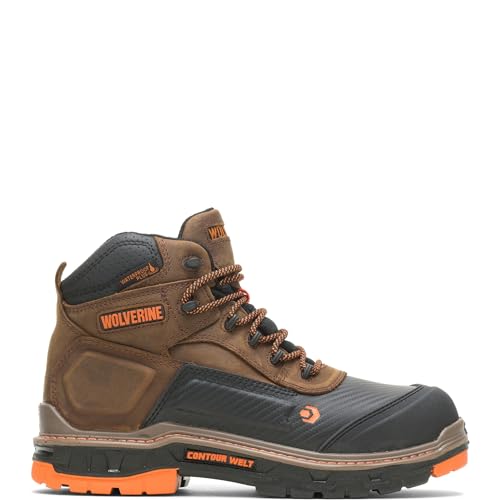
- Flexible, athletic contour welt construction moves with you by bending and flexing at essential points
- Premium waterproof leather with abrasion resistant
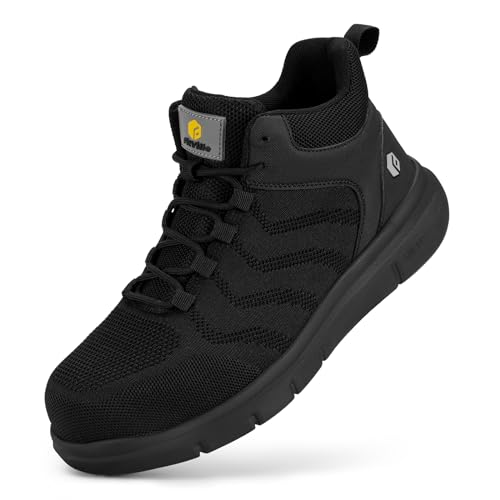
- 【Protective Composite Toe Cap】Meet ASTM-F2412-18 safety standard.The reliable composite toe box provides ultra protection against impact and compression hazards to keep you
- 【Puncture Proof】Kevlar midsoles reinforce feet protection from puncture risks, enhances durability and puncture resistance, ensuring your safety remains a top priority. So don't
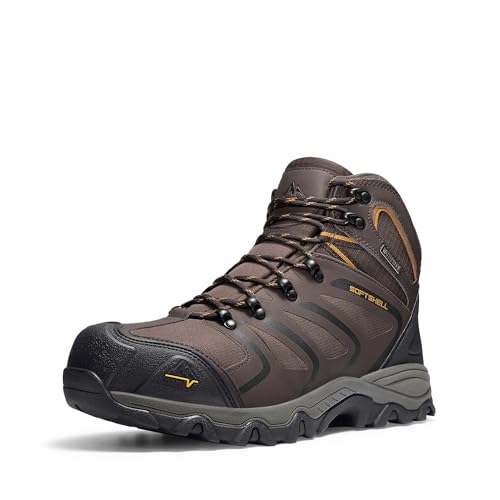
- Enhanced Toe Protection: These work boots for men feature a steel toe and rubber toe cap meets ASTM 2413-18 standard, that protect your feet from falling objects and accidental
- Waterproof Upper: With a static waterproof upper that lasts for up to 4 hours, these men's steel toe boots keep feet dry and comfortable even in wet and challenging work
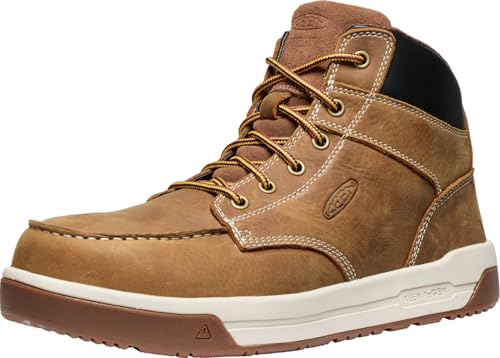
- Grip, guard, and walk in style wearing the KEEN Utility Gibson Boot. Crafted from full-grain water-resistant leather upper, mesh liner provides breathability to help keep feet
- Carbon fiber safety toe meets ASTM F3445-21 and F2413-18 M I/75 C/75 ESD/SD (Static Dissipative) 35 standards
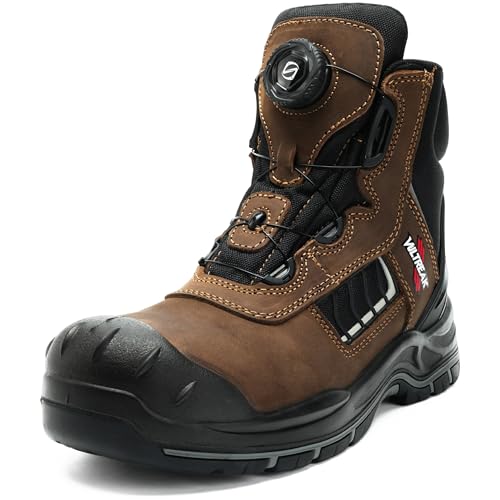
- Quick Fit System – No Laces Design The dial closure eliminates tying and adjusting—just twist to lock in a secure fit. Clean, fast, and built for people who don't like to waste
- Premium Leather – Made to Last Crafted from full-grain cowhide with a waxed finish, this leather develops a natural patina over time without losing durability. It resists light
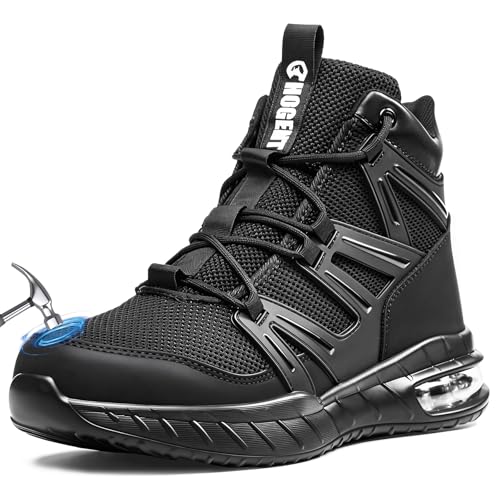
- 【STEEL TOE PROTECTION】: Hogent steel toe boots for men feature a protective steel toe cap for demanding jobs; high-top coverage adds ankle support; these steel toe shoes combine
- 【PUNCTURE-RESISTANT SUPPORT】: Built with a lightweight KEVLAR layer to help protect feet from nails and sharp objects; these work boots for men offer flexible support and
The Short Answer: How Should Work Boots Fit?
A work boot should hold your heel with almost no lift, feel snug but not gripping through the midfoot, and leave roughly a thumb's width of space in front of your longest toe. Your toes should not touch the inside of the safety cap at any point in your stride. Length is what you size for; width is what you fix with the correct width letter, not by buying a longer boot.
Six checks worth running before you keep a pair:
- Try them at the end of the day, in the socks you actually work in. Feet swell across a shift, and a boot fitted to a cold morning foot is a boot that pinches by afternoon.
- Heel lift: a small amount on a new stiff sole is normal and usually reduces as the sole flexes. Sliding movement you can feel with every step is a fit failure, not a break-in problem.
- Toe clearance: stand up, walk downhill if you can find a slope, and confirm your toes never contact the front of the cap. Safety toes have a fixed shape and will not mold to you.
- Ball-of-foot placement: the widest part of your foot should sit at the widest part of the boot. If it sits behind the flex point, the boot is too long, and a longer boot is the most common wrong fix for a width problem.
- Instep pressure: lace tension should be adjustable enough to lock the heel without crushing the top of the foot. High insteps often need a boot with more lacing rows or a different closure system entirely.
- Volume check with your own insole: if you already use an orthotic, fit the boot with it in place. Swapping footbeds changes internal volume noticeably.
Types of Work Boot Fit Systems Explained
The closure and the sole shape change how a boot fits more than the leather does. Here is the practical breakdown, with the caveat that a listing only tells you what it tells you.
| Type | How it affects fit | What to watch for | Example from this guide |
|---|---|---|---|
| Traditional lace-up, leather upper | Lets you tune tension separately over the instep and ankle | Needs re-lacing as leather relaxes | Closure type is not stated in the listings supplied here |
| Knit or textile upper | Conforms around bunions and bony spots faster than leather | Less structure to hold a heel | FitVille Extra Wide Work Boots for Men Composite Steel Toe Safety Boots High Top Work Shoes for Men |
| Dial closure | Twist to lock in a secure fit without tying laces | One tension zone rather than several | VULTREAK Composite Toe Work Boots for Men and Women – Exceeds Steel Toe Protection |
| Lugged outsole | Deep tread blocks add height and grip on soft or uneven ground | More sole stack under the foot | NORTIV 8 Waterproof Steel Toe Work Boots for Men |
| Direct attached outsole | Sole is bonded to the upper as one unit | Points toward replace rather than resole | KEEN Utility Men's Gibson Boot (Carbon-Fiber Toe) Belgian/Gum 10.5 Medium |
Wedge Sole vs Lug Sole Comfort
A wedge sole is flat and continuous, so weight spreads across the whole footprint. That is why wedges are popular with people who stand on concrete, asphalt or finished flooring all day and who do not want tread blocks packing with debris. A lug sole breaks the contact area into deep, separated blocks, which bites into mud, gravel, snow and loose dirt but concentrates pressure through those blocks on hard flat surfaces.
Neither is universally more comfortable. The right answer follows your ground. Of the boots here, the NORTIV 8 lugged rubber outsole is stated to meet ASTM F3445-13 [S5], which tells you it is built for traction on varied terrain. The other listings supplied describe outsole materials and slip performance without specifying wedge or lug geometry, so treat sole shape on those as something to confirm from photos or the manufacturer.
For a longer treatment, see our wedge sole vs lug sole comparison.
Work Boot Width Sizing: D vs EE vs EEE
On US men's size charts, D is generally the standard or "medium" width, with EE stepping wider and EEE wider still. Letter widths are not standardized across brands, though, so a EE in one maker's last can feel like a different boot entirely in another's. Read the maker's own size chart before you commit.
Here is the rule most people get wrong: if the boot pinches across the ball of your foot, going up half a length size does not solve it. It moves the widest part of the boot forward of the widest part of your foot, adds heel slip, and leaves the toe cap sitting in a new and equally unhelpful place. Width problems need width solutions.
What the supplied listings actually say about width is limited but useful. The Wolverine listing title specifies 9.5 Medium [S3] and the KEEN listing title specifies 10.5 Medium [S6], which tells you those particular listings are medium-width offerings. FitVille's listing advertises wide and x-wide size modes and a roomy toe box aimed at plantar fasciitis, flat feet, bunions and hammertoes [S4], and its listing title specifies Size 13 X-Wide [S4]. FitVille is the only boot in this group whose supplied listing explicitly advertises width modes; the other listings supplied do not state width options, which is not the same as proving those brands offer none.
If you have measured yourself into EE or wider territory, start with our wide work boot buying notes before you sort by price.
Key Features to Look For, Ranked by Importance
- A safety rating that matches your site. Read the actual standard, not the word "steel toe". Wolverine's listing states a composite toe meeting ASTM F2413-11 M I/75 C/75 EH [S3]. KEEN's carbon fiber safety toe is stated to meet ASTM F3445-21 and F2413-18 M I/75 C/75 ESD/SD (Static Dissipative) 35 [S6]. FitVille's composite toe cap is stated to meet the ASTM-F2412-18 safety standard [S4]. NORTIV 8 lists a steel toe and rubber toe cap meeting the ASTM 2413-18 standard [S5]. Those are different standards and revisions; if your employer specifies one, match it exactly.
- Correct width, then correct length. Covered above. This is the single largest lever on comfort.
- A removable footbed. It gives you a free upgrade path. Wolverine's listing describes a removable ortholite cushioned footbed for all-day comfort [S3], and KEEN lists a removable metatomical insole [S6]. Removable also means you can pull the stock insole to reclaim volume if an orthotic makes the boot too tight.
- Underfoot protection you actually need. Kevlar midsoles are listed for puncture resistance on the FitVille boot [S4], and a lightweight KEVLAR layer is listed for protection against nails and sharp objects on the Hogent boot [S8]. Puncture plates add stiffness underfoot, which is a fit consideration as well as a safety one.
- Weight. Every ounce is lifted thousands of times a day. FitVille rates the pair at 874g based on US size 9 [S4]. That is the only per-pair weight stated in the listings supplied here, so it cannot be ranked against the others; the remaining listings supplied do not publish a per-pair weight.
- Water handling, described precisely. "Waterproof" and "water-resistant" are not synonyms and the listings are not sloppy about it. Wolverine's listing specifies premium waterproof leather with an abrasion resistant toe [S3]. NORTIV 8's upper is described as a static waterproof upper that lasts for up to 4 hours [S5] — a stated duration, not indefinite protection. KEEN lists a full-grain water-resistant leather upper with a mesh liner [S6], which is a deliberately weaker claim than waterproof.
- Slip and chemical resistance for your specific hazard. Wolverine's outsole is described as slip, oil, water, abrasion and chemical-resistant [S3]. KEEN's listing cites ASTM D471-06 903# oil and isooctane chemical resistance standards [S6], and its slip resistant rubber outsole is stated to meet or exceed ASTM F2913-19 SATRA and ASTM F1677-96 Mark II non-slip testing standards [S6].
Best Insoles and Footbeds for Work Boots
The stock footbed is the cheapest thing in most boots and the fastest thing to upgrade. Three things decide whether a swap helps:
- Arch height match. An insole with more arch than your foot wants creates a pressure point; less arch than you need lets the arch collapse late in a shift. FitVille's listing describes a sponge foam insole with low arch [S4], which is a reasonable neutral starting point but a clear signal that anyone needing pronounced arch support should plan on an aftermarket footbed.
- Volume. Adding a thick insole on top of a stock one is how good boots start rubbing. Pull the original first — which requires that it be removable, hence the emphasis above.
- Material behavior. Foam insoles compress over time and stop doing their job before they look worn out. NORTIV 8 uses a mesh-covered EVA insole and a lightweight EVA midsole [S5], and the Hogent listing describes responsive air cushioning, a breathable lining and lightweight EVA soles [S8]. EVA-based cushioning is light; it also packs down with use, so treat the footbed as a wear item.
Work Boot Break-In Period: What to Expect
Break-in means the upper softening and the sole learning your flex point. It does not mean a too-small boot becoming a bigger boot, and it never means a safety toe getting roomier. The toe cap is a fixed shape.
Stiff full-grain leather generally asks for the most patience. VULTREAK's upper is described as full-grain cowhide with a waxed finish [S7], and Wolverine's is described as premium waterproof leather [S3]. Knit and textile uppers conform faster by nature — FitVille's boot uses a knit breathable upper described as keeping feet cool and dry [S4].
Construction matters too. Wolverine describes flexible, athletic contour welt construction that bends and flexes at essential points [S3]; as an inference, a build marketed on flex is one that should feel less plank-like out of the box than a heavily reinforced one. None of the supplied listings state a break-in period in days or hours, so anyone quoting you an exact figure for these specific models is guessing.
Sensible approach: wear them for short indoor sessions first, on your own floor, while you can still return them. Full details in our break-in walkthrough.
Common Mistakes to Avoid
- Sizing up to fix width. Already covered, still the number one error.
- Ignoring the toe cap shape. Two boots in the same nominal size with different cap geometry fit completely differently. Composite, carbon fiber and steel caps all have distinct profiles.
- Buying protection you do not need. Static dissipative construction, puncture plates and chemical-resistant outsoles all add cost and often stiffness. Match the hazard.
- Reading "waterproof" as permanent. A stated four-hour static waterproof rating [S5] is a specific, bounded claim, and it is more honest than a vague one.
- Assuming a wide toe box equals arch support. A roomy forefoot and a supportive midfoot are separate features. FitVille's roomy toe box is aimed at plantar fasciitis, flat feet, bunions and hammertoes [S4], while its insole is described as low arch [S4] — read both bullets, not just the headline.
- Skipping the standard number. "Meets ASTM" with no revision is not the same as a stated designation like M I/75 C/75.
Budget Considerations
Skip price-per-pair as your metric and think in cost per shift, plus what you will spend afterward. Three criteria that actually move the number:
- Whether the footbed is replaceable. A boot with a removable footbed [S3] [S6] can be refreshed cheaply rather than replaced.
- Whether the sole is a bonded unit. KEEN lists direct attached outsole construction [S6]. As an inference, bonded outsole construction generally points toward a replace-the-boot ownership model rather than a resole; the listing does not address resoling either way, so ask the manufacturer if resoleability is a purchase condition for you.
- How many hazard features you are paying for. Static dissipative rating, Kevlar puncture layer, chemical resistance, heat-resistant outsole: each is a real cost you should only carry if your site requires it.
Our Top Recommendations
Wolverine Men'sOverpass 6" Mid Composite Toe Waterproof Work Boot — Best for buyers who plan to swap in their own insole
The reason this one leads a fit-focused guide: the listing describes a removable ortholite cushioned footbed for all-day comfort [S3], which means orthotic users can pull the stock unit instead of stacking on top of it. That single detail solves more fit complaints than any amount of cushioning marketing.
Wolverine also describes flexible, athletic contour welt construction that bends and flexes at essential points [S3], the listing specifies premium waterproof leather with an abrasion resistant toe [S3], and the outsole is described as slip, oil, water, abrasion and chemical-resistant [S3]. Protection is a composite toe meeting ASTM F2413-11 M I/75 C/75 EH [S3], the EH designation being relevant if electrical hazard exposure is part of your job.
Strengths: removable cushioned footbed; a specific, fully designated safety standard; broad outsole resistance claims; waterproof leather rather than water-resistant.
Limitations: the listing title specifies 9.5 Medium [S3], so wide-footed buyers need to verify whether other widths exist in the size chart before ordering.
FitVille Extra Wide Work Boots for Men Composite Steel Toe Safety Boots High Top Work Shoes for Men — Best for wide feet and forefoot problems
If your fit problem is width, this is the listing in the group that addresses it head-on. FitVille's listing advertises wide and x-wide size modes and a roomy toe box aimed at plantar fasciitis, flat feet, bunions and hammertoes [S4]. Its listing title specifies Size 13 X-Wide [S4].
The protection package is stated as a composite toe cap meeting the ASTM-F2412-18 safety standard [S4], with Kevlar midsoles listed for puncture resistance [S4]. FitVille rates the pair at 874g based on US size 9 [S4] — the only per-pair weight published among the listings supplied here, so use it as an absolute figure rather than a comparative one.
Strengths: explicit width options; forefoot-condition focus; published weight; knit breathable upper described as keeping feet cool and dry [S4], which conforms faster than stiff leather.
Limitations: the insole is described as a sponge foam insole with low arch [S4], so buyers who need substantial arch support should budget for a footbed swap. A knit upper is also a different proposition from leather for abrasion-heavy environments, and the listing does not publish an abrasion rating.
NORTIV 8 Waterproof Steel Toe Work Boots for Men — Best for uneven ground where lug traction matters
The NORTIV 8 Waterproof Steel Toe Work Boots for Men listing states a traction standard: the lugged rubber outsole is stated to meet ASTM F3445-13 [S5]. If you work on gravel, dirt, mud or shifting terrain rather than flat concrete, that geometry is the one you want under you.
Toe protection is listed as a steel toe and rubber toe cap meeting the ASTM 2413-18 standard [S5], and the boot uses a mesh-covered EVA insole and a lightweight EVA midsole [S5].
Strengths: stated slip-resistance standard for the outsole; steel toe plus an external rubber toe cap for scuff-heavy work; light EVA cushioning stack.
Limitations: the upper is described as a static waterproof upper that lasts for up to 4 hours [S5] — a bounded claim, and worth knowing if you stand in water longer than that. EVA cushioning is light but compresses with use, so plan on the footbed being a consumable.
KEEN Utility Men's Gibson Boot (Carbon-Fiber Toe) Belgian/Gum 10.5 Medium — Best for static-dissipative and chemical-exposure work
The specification that earns this a place: the carbon fiber safety toe is stated to meet ASTM F3445-21 and F2413-18 M I/75 C/75 ESD/SD (Static Dissipative) 35 [S6]. If your site requires ESD footwear, that designation is the thing to hand your safety officer.
The listing also cites ASTM D471-06 903# oil and isooctane chemical resistance standards [S6], and the slip resistant rubber outsole is stated to meet or exceed ASTM F2913-19 SATRA and ASTM F1677-96 Mark II non-slip testing standards [S6]. On fit, KEEN lists a full-grain water-resistant leather upper with a mesh liner and a removable metatomical insole [S6], and the listing title specifies 10.5 Medium [S6].
Strengths: the most densely specified standards list in this group; removable insole for orthotic users; breathable mesh liner for warm environments.
Limitations: water-resistant is not waterproof, and the listing is explicit about that wording. KEEN lists direct attached outsole construction [S6]; as an inference, that suggests a bonded sole unit rather than a resoleable one, though the listing does not discuss resoling.
VULTREAK Composite Toe Work Boots for Men and Women – Exceeds Steel Toe Protection — Best for a no-laces dial closure
Fit consistency is the pitch here. VULTREAK's listing describes a dial closure Quick Fit System that replaces laces [S7]; the listing states the dial closure eliminates tying and adjusting — you twist to lock in a secure fit [S7]. The trade-off is real and structural: a dial tightens one zone, where lacing lets you run the instep and ankle at different tensions.
The listing cites European S3 and HRO certification covering slip resistance, water resistance, anti-static protection and a heat-resistant outsole [S7]. The toe cap is described as EN ISO 20345 certified and rated to withstand up to 3,300 lbs (1,500 kg) of compression and impact of 45 lbs (20 kg) dropped from 3.3 ft (1 m) [S7]. The upper is described as full-grain cowhide with a waxed finish [S7], and the listing describes a cushioned insole and a Kevlar puncture-resistant midsole [S7].
Strengths: dial closure that eliminates tying; published compression and impact figures; heat-resistant outsole certification for welding-adjacent work.
Limitations: the product title calls it a composite toe while the third feature bullet is headed "Steel Toe Protection", so confirm the actual toe material with the manufacturer before ordering for a metal-restricted or metal-detector site [S7]. Its certifications are cited to European standards rather than the ASTM designations some US employers specify, so check what your workplace accepts.
Hogent Steel Toe Boots for Men — Best for a cushioned, lightweight high-top on flat indoor surfaces
This one is aimed squarely at warehouse-style comfort. Hogent lists a steel toe cap plus high-top coverage for ankle support [S8], and the listing describes responsive air cushioning, a breathable lining and lightweight EVA soles [S8]. A lightweight KEVLAR layer is listed for protection against nails and sharp objects [S8].
Strengths: cushioned, light build suited to long hours of standing and walking; puncture layer included; the listing states availability for men and women [S8].
Limitations: the supplied listing information does not state an ASTM or EN safety rating for this model [S8]. If your employer requires a documented standard, that is a gap you need to close with the seller before ordering, not after. The listing also does not specify wedge or lug outsole geometry.
How to Get the Best Deal on Amazon
- Order two widths or two sizes when the return policy allows it, and return the loser. Fit is the whole game and no size chart substitutes for standing in the boot.
- Check the size and color you actually want. Work boot pricing frequently varies by size and colorway within the same listing.
- Read the variation you are buying. Listing titles here carry size and width information — 9.5 Medium [S3], Size 13 X-Wide [S4], 10.5 Medium [S6] — and the variation you select is the one that ships.
- Confirm the safety standard on the variation page, not on a review or a third-party summary.
- Budget for a footbed if the stock insole does not match your arch, and factor that into what the boot really costs you.
Maintenance and Care Tips
- Rotate pairs if you can. Cushioning foams recover between wears; footwear worn every day without a break has no recovery time.
- Pull removable footbeds to dry them. Boots with removable insoles [S3] [S6] dry faster and smell less when the footbed comes out overnight.
- Clean waxed and full-grain leather gently. VULTREAK describes its waxed full-grain cowhide as resisting light dirt and scuffs and wiping clean without shine or special care [S7]; follow the maker's own guidance rather than improvising a treatment that may compromise a waterproof membrane.
- Do not force-dry boots on a heater. Heat is hard on adhesives and on bonded sole construction in particular.
- Retire compressed footbeds early. A flattened insole undoes the fit you paid for long before the upper looks worn.
- Know where to escalate a genuine safety failure. If a boot fails in a way that injures someone, the CPSC accepts consumer reports of unsafe products [S1], and USA.gov's consumer protection hub explains your options if a seller misrepresents what you bought [S2].
How We Research
This guide was assembled by reading published product data, not by wearing boots. For each model, we pulled the Amazon Creators API verified product record and the product listing feature bullets as retrieved on 8 September 2026, then compared what each listing does and does not state about safety designations, upper materials, footbeds, outsoles and stated width or size.
Where a listing publishes a figure — a weight in grams, a compression rating, a waterproof duration — we repeat that figure and attribute it. Where a listing is silent, we say it is silent rather than filling the gap from elsewhere. Inferences about what a specification implies in daily use are labeled as inferences.
Final Verdict
If you take one thing from this guide, take the width point: length is the wrong tool for a width problem, and no amount of break-in widens a safety toe cap.
For fit flexibility, the Wolverine Men'sOverpass 6" Mid Composite Toe Waterproof Work Boot is the most adaptable choice here for buyers who use their own orthotics, because its listing describes a removable ortholite cushioned footbed for all-day comfort [S3] alongside a fully designated composite toe standard, ASTM F2413-11 M I/75 C/75 EH [S3]. Check Price on Amazon
For wide feet specifically, the FitVille Extra Wide Work Boots for Men Composite Steel Toe Safety Boots High Top Work Shoes for Men is the pick on the strength of its stated wide and x-wide size modes and a roomy toe box aimed at plantar fasciitis, flat feet, bunions and hammertoes [S4]; its listing title also specifies Size 13 X-Wide [S4]. Check Price on Amazon
And if your site hands you a written standard, let that decide first. The KEEN carbon fiber toe stated to meet ASTM F3445-21 and F2413-18 M I/75 C/75 ESD/SD (Static Dissipative) 35 [S6] and the NORTIV 8 lugged outsole stated to meet ASTM F3445-13 [S5] are specific answers to specific requirements. Comfort is a fit question; compliance is a paperwork question, and you need both to be right.
Frequently Asked Questions
How much toe room should a work boot have?
Aim for roughly a thumb's width between your longest toe and the front of the boot, checked while standing in your work socks at the end of the day when your feet are at their largest. In a safety-toe boot this matters more, not less: the cap has a fixed shape and will not stretch to accommodate you.
Should I size up in work boots?
Only if the length is genuinely short. Sizing up to relieve tightness across the ball of the foot moves the boot's widest point ahead of your foot's widest point and introduces heel slip. Look for a wider width letter instead, or a listing that states a roomy toe box — FitVille's listing advertises wide and x-wide size modes and a roomy toe box aimed at plantar fasciitis, flat feet, bunions and hammertoes [S4].
What is the difference between D, EE and EEE widths?
On US men's size charts, D is generally the standard or medium width, with EE and EEE stepping progressively wider. Those letters are not standardized between manufacturers, so always check the specific brand's chart. Some listings state width directly in the title, as with the Wolverine listing's 9.5 Medium [S3] and the KEEN listing's 10.5 Medium [S6].
How long is the work boot break-in period?
It depends on upper material and construction, and none of the listings covered here publish a break-in figure. Stiff full-grain leather like VULTREAK's waxed full-grain cowhide [S7] generally asks for more patience than a knit upper such as FitVille's knit breathable upper [S4]. Wear new boots indoors in short sessions while returns are still open.
Are composite toes more comfortable than steel toes?
Comfort depends on the shape of the cap and the fit of the boot, not on the material alone. What the material does change is what else the boot can claim — KEEN's carbon fiber toe carries an ESD/SD (Static Dissipative) 35 designation in its stated standard [S6], which is relevant on electronics-sensitive sites.
Do I need a puncture-resistant midsole?
Only if your ground has nails, screws or sharp debris. Kevlar midsoles are listed for puncture resistance on the FitVille boot [S4] and a lightweight KEVLAR layer is listed on the Hogent boot [S8]. A puncture layer adds underfoot stiffness, so it is a fit trade-off as well as a safety upgrade.
Can I replace the insole in a work boot?
If the boot has a removable footbed, yes — and that is the cleanest way to fix an arch mismatch. Wolverine's listing describes a removable ortholite cushioned footbed [S3] and KEEN lists a removable metatomical insole [S6]. Always remove the original first rather than stacking a new insole on top, which reduces internal volume and causes rubbing.
Sources and Methodology
No boot on this page was worn, flexed, soaked, weighed or walked in by anyone here — this site runs no lab and does no product research, and it would be dishonest to imply otherwise in a category where fit is personal anyway. What went into this guide is close reading of the Amazon Creators API verified product records and the product listing feature bullets for all six models as retrieved on 8 September 2026, comparing the safety designations, upper and outsole materials, footbed descriptions and stated sizes each brand chose to publish — and noting where a listing stays quiet.
That kind of research answers the questions specifications can answer: which standard a toe cap meets, whether a footbed comes out, whether the upper is called waterproof or water-resistant, and how long a stated waterproof claim actually runs. It cannot tell you how a given last matches your foot. Use the published data to shortlist two or three candidates, then let your own feet, in your own socks, at the end of your own day, make the final call.