As an Amazon Associate this site earns from qualifying purchases.
Quick Picks
| Product | What it actually is | Best for | Link |
|---|---|---|---|
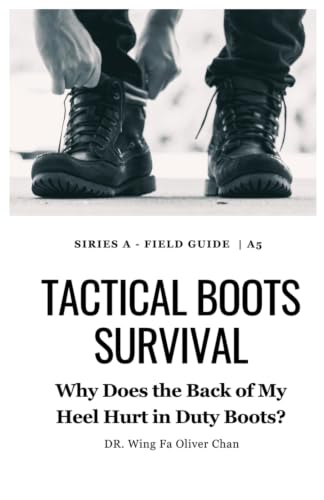
| Why Does the Back of My Heel Hurt in Duty Boots?: Understanding Heel Pain in Duty Boots (Tactical Boots Survival) | A published title focused on posterior heel pain in duty boots | Readers who want to understand the cause before spending on gear | Check Price on Amazon |
| Geyoga 8 Pcs Boot Toe Protector for Work Shoes Cap Cover | Eight glue-on natural rubber toe caps for the outside of a boot | Keeping a broken-in pair in service instead of restarting break-in | Check Price on Amazon |
| Bencailor 4 Pcs Boot Toe Protector for Work Shoes Cap Cover | Four glue-on rubber toe caps for the outside of a boot | A smaller four-piece pack of glue-on rubber toe caps | Check Price on Amazon |
Disclosure: We earn a small commission from qualifying Amazon purchases at no extra cost to you.
As an Amazon Associate, we earn from qualifying purchases.Last Updated: September 2026
Short answer: most work-boot foot pain traces back to three fixable things — a boot shaped differently from your foot, a flat factory footbed that gives the arch nothing to rest on, and a heel that lifts on every step. Fix the fit first, the footbed second, and lacing and socks third. Buying another pair of boots should be your last move, not your first.
This page is a research page. Nobody here wore, walked in, or bench-tested any product named below; the product notes come from published Amazon listing information, read closely and interpreted for you.
Be clear on one thing before you scroll: the toe protectors above do nothing for your feet. They are exterior boot repair. They earn a place on a foot-pain page for one indirect reason explained below.
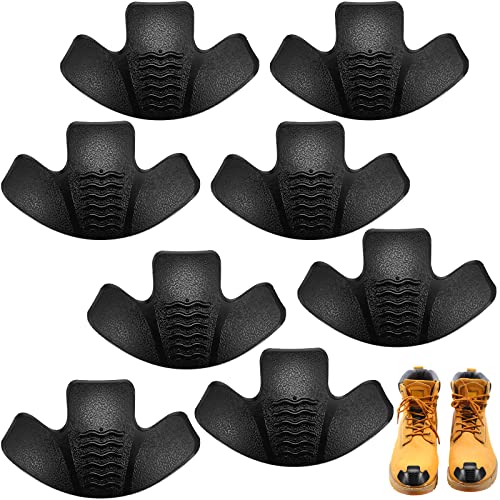
- Boots Accessories Package: you will receive 8 pieces of boot protectors in black; These shoe toe guards sufficient quantity can meet your daily needs and replacement; Note: these
- Reliable Material: these work shoe toe guards are made of natural rubber, which is reliable and sturdy, high wear resistance, no objectional odor; These work shoe toe cover not
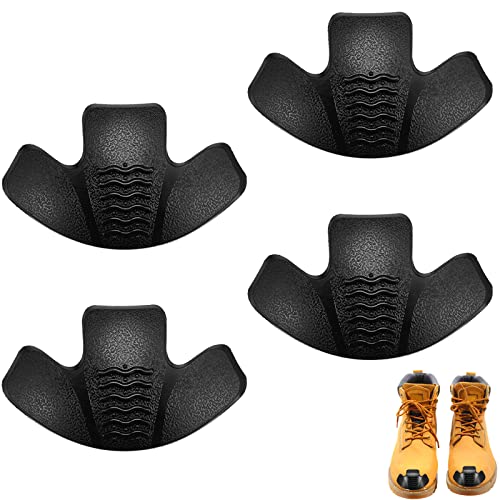
- boots accessories Package: you will receive 4 pieces of boot protectors in black.these shoe toe guards sufficient quantity can meet your daily needs and replacement. Note: these
- Delicate design: our rubber boots cover design is reasonable and beautiful, nice curved design and streamlined shape, suitable for Martin boots, roof shoes, work boots,athletic
The Problem: Why Work Boots Hurt After a Long Shift
A safety boot is built around a rigid protective toe box and a stiff shank. That structure is the point — and it also means the boot cannot flex and mould around your foot the way a running shoe does. So every mismatch between your foot and the last gets concentrated instead of absorbed.
Three patterns cover most complaints. Burning across the ball of the foot usually points to a footbed with no metatarsal support and a long day on concrete. A sharp stab under the heel on the first steps out of bed points toward the plantar fascia. Aching or blistering at the back of the heel points at the boot's heel counter and how much your heel travels inside it.
Here's the thing: those three problems have three different fixes, and people routinely buy the wrong one. An insole will not stop heel slip. Thicker socks will not fix a boot that is a half size too short.
Step-by-Step: How to Stop Foot and Heel Pain From Work Boots
- Diagnose by location, not by feeling. Note exactly where it hurts and when — first steps of the day, hour six, or only on ladders. That single detail decides everything that follows.
- Check length and width at the end of a shift. Feet swell during the day. Measure and try boots late, not first thing in the morning, and confirm your longest toe has clearance when standing loaded.
- Kill heel slip with lacing before you spend money. Run a heel-lock (runner's loop) through the top two eyelets to anchor the ankle back into the heel counter. Heel movement is what causes rubbing at the back of the heel.
- Replace the factory footbed. Stock insoles in work boots are typically thin die-cut foam. Swapping in a supportive footbed with a defined arch shape is the highest-leverage change most workers can make.
- Match insole volume to a safety toe. Steel and composite toe caps steal vertical room. A thick aftermarket insole can push the top of your toes into the underside of the cap, so favour lower-volume or trim-to-fit insoles in safety footwear.
- Change socks. Cushioned crew socks with a flat toe seam and moisture management reduce friction; cotton holds sweat against skin.
- Rotate two pairs. Alternating pairs lets midsole foam and leather dry and decompress between shifts.
- Escalate if it persists. Heel pain that survives four to six weeks of fit and footbed changes is a clinical question, not a shopping question. See a podiatrist or your employer's occupational health service.
Tools and Products You'll Need
> Recommended Products > - Understand the mechanism first: Check Price on Amazon for Why Does the Back of My Heel Hurt in Duty Boots?: Understanding Heel Pain in Duty Boots (Tactical Boots Survival) > - Extend the life of boots that already fit you: Check Price on Amazon for the Geyoga 8 Pcs Boot Toe Protector for Work Shoes Cap Cover > - Same repair job, smaller pack: Check Price on Amazon for the Bencailor 4 Pcs Boot Toe Protector for Work Shoes Cap Cover
Why Does the Back of My Heel Hurt in Duty Boots?: Understanding Heel Pain in Duty Boots (Tactical Boots Survival) — Best for understanding posterior heel pain before you buy anything
This is the only item here aimed squarely at the symptom in the headline. The title itself defines the scope: heel pain at the back of the heel, in duty boots specifically, which is the exact complaint a heel counter and heel slip produce. Beyond the title, the supplied record for ASIN B0GWTWTQ9P contains only the product title — it includes no feature bullets stating format, length or author. So judge it on subject match, not on specifications we cannot confirm from that record. If you are the kind of reader who wants the mechanism explained before spending on insoles you may not need, that match is the argument for it. Check Price on Amazon
Geyoga 8 Pcs Boot Toe Protector for Work Shoes Cap Cover — Best for keeping a broken-in pair in service
Here is the honest connection to foot pain: a boot you have already broken in is a boot your foot has negotiated with. Scuffing the toe through is a common reason people replace boots early and restart that process, and glue-on toe caps address that failure point.
The listing states you receive 8 pieces of boot protectors in black. It describes the material as natural rubber with high wear resistance and no objectional odor, and says the covers are not easy to break and deform. The listing describes this quantity as sufficient to meet daily needs and replacement.
Two limitations worth knowing before you order. The listing says glue and sandpaper are not included and recommends a polyurethane grease glue, so budget for adhesive. It also tells buyers to ensure the product is securely fastened before use — a bonded rubber cap is only as good as your surface prep. The listed uses include construction sites, industrial sites, spring outdoor sports, hiking and rock camping climbing. Note that these are cosmetic and abrasion covers; nothing in the listing establishes impact protection or any safety rating. Check Price on Amazon
Bencailor 4 Pcs Boot Toe Protector for Work Shoes Cap Cover — Best for a smaller four-piece pack
Same job, smaller quantity. The listing for the Bencailor 4 Pcs Boot Toe Protector for Work Shoes Cap Cover,Black (ASIN B09H41FG5Y) says you receive 4 pieces of boot protectors in black, a quantity it describes as sufficient to meet daily needs and replacement.
It also notes these work boot toe caps are made of rubber and do not include glue and sandpaper, and it recommends a polyurethane grease glue. The listing describes the shape as a curved, streamlined design suitable for Martin boots, roof shoes, work boots, athletic shoes, leather boots, steel toed boots and other styles, and positions them for construction sites, industrial sites, outdoor sports and rock camping climbing.
Installation, per the listing, is: sandpaper the protector and the shoe, wipe clean with a towel, remove excess dirt, apply the right amount of glue, press for a while, and wait for the glue to dry. Read that as a real bench job with cure time, not a peel-and-stick.
Tips for Best Results
- Change one variable at a time. New insoles plus new socks plus new lacing means you learn nothing about what worked.
- Give any footbed change a full week of shifts before judging it.
- If the top of your toes hurts after adding an insole, you have lost too much height under the safety cap. Go thinner.
- Keep leather conditioned. A dried-out, stiffened upper flexes in the wrong places.
Common Mistakes to Avoid
- Sizing up to cure toe pressure. A longer boot moves the flex point past your metatarsal joints and adds heel slip.
- Treating cushioning as support. Soft foam feels good in the aisle and can still let the arch collapse all shift.
- Ignoring back-of-heel pain. That is a fit-and-friction problem; more cushion underfoot does not touch it.
- Expecting exterior toe caps to change comfort. They are glued to the outside of the boot.
How We Research
This website does not run a lab. For this page, each product was checked against its Amazon Creators API verified product record and, where that record includes them, its product listing feature bullets, retrieved 2026-09-08, and every count, material and instruction above is quoted or paraphrased from those records. Where the supplied record contains nothing on a point — format, dimensions, certifications — that is stated rather than guessed. Related reading on this site includes our work boot fit guide and insole buying guide.
Frequently Asked Questions
Do insoles help with plantar fasciitis pain from steel toe boots? A supportive footbed is the standard first self-help step for arch and under-heel pain, but it is not a diagnosis or a cure. Choose a lower-volume insole in safety footwear so you do not lose toe clearance under the cap, and see a clinician if pain persists.
How do I stop my heel from slipping in work boots? Try heel-lock lacing through the top eyelets first, then thicker crew socks, then a heel grip pad. If the heel still moves, the boot's heel width is wrong for you and no accessory will fix it.
Should I size up in steel toe boots? Go up only if your toes contact the cap when standing. Otherwise ask for a wider width instead — extra length introduces heel movement and shifts the boot's flex point.
Will boot toe protectors help with foot pain? No. Toe caps like the Geyoga 8 Pcs Boot Toe Protector for Work Shoes Cap Cover are sanded and glued to the outside of the boot according to the listing instructions, so they sit nowhere near your foot. Their value is keeping a boot that already fits you out of the bin.
Do the toe protectors come with glue? No. The Bencailor listing notes these work boot toe caps are made of rubber and do not include glue and sandpaper, and it recommends a polyurethane grease glue.
When should I stop self-treating and see a professional? If heel pain survives four to six weeks of fit, lacing and footbed changes, or if you have numbness, swelling or night pain, get it assessed rather than buying another insole.
Final Verdict
If your problem is pain, the highest-value item on this page is the reading, not the rubber: Why Does the Back of My Heel Hurt in Duty Boots?: Understanding Heel Pain in Duty Boots (Tactical Boots Survival) is the only listed item whose stated subject is the exact symptom, and understanding whether your heel pain is friction or fascia decides which fix you buy next.
If your boots fit and you are only trying to keep them alive, the Geyoga 8 Pcs Boot Toe Protector for Work Shoes Cap Cover is the more sensible buy of the two toe-cap sets: the listing states you receive 8 pieces of boot protectors in black, a quantity it describes as sufficient to meet daily needs and replacement. Take the Bencailor 4 Pcs Boot Toe Protector for Work Shoes Cap Cover if you want the smaller four-piece pack. Both require adhesive you buy separately, so plan the job before you plan the shift.
Related Resources
- U.S. Consumer Product Safety Commission — general consumer product safety information: https://www.cpsc.gov/
- USA.gov consumer protection guidance for buyers: https://www.usa.gov/consumer-protection
Sources and Methodology
No pair of boots, insole or toe cap discussed here was worn, glued, flexed or measured by this website; there is no lab behind this page and no hands-on trial stands behind any sentence in it. What sits behind it is close reading of each item's Amazon Creators API verified product record and, where present in that record, its listing feature bullets, retrieved 2026-09-08, cross-checked so that no count, material or instruction from one product was carried onto another. For a category like this, that evidence is genuinely decisive on quantities, materials and installation requirements — you can trust the 4-piece and 8-piece counts and the fact that adhesive is not supplied — and it is silent on durability over months of site work, which is why no longevity claim appears above.